New Construction Marketing Podcast
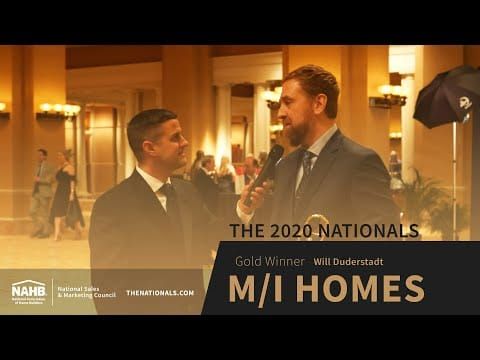
On Episode 14 of the New Construction Marketing Podcast, Anya and I discuss all things Facebook: using personal page vs business page, running ads and groups.
"We've missed the social part of social media. We've missed building those relationships."
Transcript:
Anya Chrisanthon: Welcome to the show, everyone. My name is Anya Chrisanthon, and I'm your host. Thank you so much for tuning in for another episode of the New Construction Marketing Podcast. I am super excited to introduce our guest today. It's been a long time coming, and he's one busy dude. His name is Will Duderstadt. I'm sorry, Duder Stud. I had to say it that way. Now it's out of my system. How cool of the last name is that? A dude in the stud, right?
Will Duderstadt: Absolutely. It's the dude, right? Yeah. It's the dude.
Anya Chrisanthon: I love that last name. Will is a digital marketing director with MI Homes, and he is all things digital media So we have an expert with us and I thought it would be perfect opportunity to find out what's working right now with digital world, especially for us as sales reps, we're always trying to attract customers. We're trying to put out Facebook ads. We're trying to boost our posts. There's Instagram, Twitter, there's so many different things. So obviously you being an expert, it's perfect opportunity for us to get it from the horses now, so to speak. But Will, before we begin, can you tell us a little bit about your background, where your awesome last name and your beard comes from? And how did you end up in the building industry?
Will Duderstadt: Absolutely. It's a pleasure to be here. Like you said, it's a long time in the making. We've been trading emails and messages for quite a while. My background is not as direct into home building as many people kind of get to experience. But growing up, my great grandfather was the founder of a custom home building company back in Pittsburgh. His company was founded in 1950. And it has always been in my blood, literally. I was exposed to it growing up and got to watch it and see it. There's craftsmanship in my family, obviously, on my mother's side there. My dad was a, he's now a retired woodshop teacher for high school. And I inherited none of those actual skills.
Anya Chrisanthon: That's a bummer.
Will Duderstadt: I know, right? What I can do is I can be pretty good with a computer rather than a hammer. And I took that and really tried to build a career on the digital marketing side. And I started with Apple Computer. Before it was cool to work at Apple, before the iPod or the iPhone or even the retail stores were a thing, I joined them.
Anya Chrisanthon: Wow, when did you work at Apple?
Will Duderstadt: That would have been 2001 through 2006.
Anya Chrisanthon: So how many employees, I mean, still was a pretty big company.
Will Duderstadt: Oh yeah, still a big company. I remember my employee number, which is sequential from the very beginning. Steve is employee number zero. I'm 48848, so almost a 50,000th employee, and I'm sure it's grown exponentially since then. So after Apple, I did a a couple different things, worked for a manufacturing company, founded a, or co-founded a print magazine that covered Collegiate Lacrosse, which was eventually acquired by ESPN, and was self-employed for a couple of years until this perfect opportunity came along. I knew I wanted to work with a home builder, and I knew I could leverage a lot of my knowledge of the digital side to an industry that maybe isn't the quickest to adopt some of those tactics.
Anya Chrisanthon: No, definitely not. It seems that home building industry is definitely lacking in all things technology, all things CRM, and it's definitely behind in the digital marketing world.
Will Duderstadt: Right, so we're getting better, which is a good thing, but we're getting better to people like you that are putting together, I think, an awesome group of different people to have opinions and share thoughts and ideas. And as an industry, if we are a little bit more open with some of this information and just the idea of what can be implemented and used, we're all going to benefit. And new homes as a whole will feel a pretty tremendous lift.
Anya Chrisanthon: Absolutely. So it's like the wild, wild west right now, right? So we're the gunslinging bandits, you can say. Right, yeah. So it's the most exciting time.
Will Duderstadt: Yes.
Anya Chrisanthon: Yes. So I've heard you say before, and I can't remember where was it that you actually managed to get too many leads at some point for your team? So how did that happen? How do you get too many leads?
Will Duderstadt: How do you get too many leads? That's the question, right? Every salesperson would absolutely die to have too many leads. We built here at MI, we built with a partner, two partners of ours actually, homes.com, who bought the top level domain.home. which is pretty neat, like .com or .net, they bought .homes. And they reached out and asked if I could do something kind of cool with a .homes URL to really just bring some attention to the fact that this new TLD exists. So I partnered with the brilliant team over at O'Neill Interactive. Dennis O'Neill's one of the smartest guys in this industry, and we dreamt up this idea of doing a very BuzzFeed-esque quiz. And you've taken a quiz, right, on Sofa.
Anya Chrisanthon: Oh, who doesn't love a quiz, right? Especially if you love cats.
Will Duderstadt: I mean, yes, right. Yes. So, you know, I've taken them all. I've taken which Seinfeld character are you? Which emoji represents you? I even took the, what character from Sex and the City are you? And I've never.
Anya Chrisanthon: So what character are you?
Will Duderstadt: I'm Miranda, and I don't know what that means.
Anya Chrisanthon: Miranda, okay, I can see it. I mean, I guess you guys shared the hair color in general, maybe?
Will Duderstadt: Okay, yeah.
Anya Chrisanthon: Dead on.
Will Duderstadt: But we wanted to take that fun nature, that very viral nature, and apply it to something in home building. So we created a quiz, new versus resale.homes. And if any of your listeners want to try it, they can go to demo.newversusresale.homes. Because if they take the demo, then they won't actually be a lead, and I won't try and sell them a home. But the whole idea is we're going to ask you seven questions. And we're going to determine if a new home is right for you or if a resale home is right for you. Spoiler alert, I'm a new home marketer. So the quiz is kind of geared towards getting people to think that a new home.
Anya Chrisanthon: You're telling me it's, oh my gosh.
Will Duderstadt: Right. And ultimately, that's how we ended up generating too many leads because it was fun and shareable and kind of humorous along the way. The people that took it immediately posted their results to their social channels and they encouraged their friends to take it. And we really ended up just generating, admittedly, some lower quality leads, right? Because it was maybe too high on the fun, but it was enough that many of our sales team raised their hand and said, Will, it's too many. Can you turn it off for a little bit? Which as a marketer, hard to hear. You did too good of a job, but we learned a lot, right? We learned that if you cast too broad of a net, those leads are going to decrease in quality a little bit. But we learned that there's an appetite for people to take quizzes that aren't necessarily Seinfeld emojis and Sex in the City. So we've refined it a bit since then, and we continue to use it as one of the marketing tools that we have.
Anya Chrisanthon: I have tried quiz myself in the past. And so what program do you use to create quizzes?
Will Duderstadt: So I suffer sometimes from not invented here, if you've heard of that before, right? It really is this mental syndrome where you have to build everything from scratch and make it custom.
Anya Chrisanthon: Really? Don't tell me. Yeah.
Will Duderstadt: So there's plenty of tools that are out there, but Dennis and his team at O'Neill Interactive, they saw the vision and they built something that was very specific and tailored to us. But I would encourage your listeners, if they want to try this, there's a lot of free tools. Quizzer is one of them. It's not spelled literally. There's like an extra Z and maybe it's missing a vowel. But I can.
Anya Chrisanthon: I'll like it in the show notes for sure, because I have used that as a tool before for something. I mean, I didn't get too many leads, but we can always strive for that. Right, But if the listeners want to try something like that, when they can create a quiz and push it to their social media channels, what are some of the ideas? Like how, you know, what kind of a quiz could we potentially create beyond new versus used? What do you think would be some of the good ideas?
Will Duderstadt: Man, get inspiration from what conversations are happening in the sales office. That's the first step, right? Because if there is a literal question that people are asking, you can riff on that a little bit and then make it a little bit more fun. So if you're a builder that offers a wildly different product line, modern homes, craftsman homes, and maybe a Georgian home in terms of architecture. Your quiz could be, you know, which personality or how does your personality match to a, to an architecture type.
Anya Chrisanthon: I like that.
Will Duderstadt: It could be the type of neighborhood that you might build in. If it's a country club that has a lot of amenities versus maybe a more traditional closed community with just sidewalks and a green area. And The variety that you build is really going to drive a lot of those different options that you're going to make available to your customers. So turn it into a fun little quiz, right? Instead of a literal question and answer survey kind of thing. Have fun with it.
Anya Chrisanthon: Yeah, and I think it kind of lowers the guard for customers when you're interacting with them in that fun way.
Will Duderstadt: Yes.
Anya Chrisanthon: And maybe they'll actually be willing to submit that precious e-mail address, right, if you make it fun. Absolutely.
Will Duderstadt: For sure.
Anya Chrisanthon: All right, so if we're looking to generate some of those leads online, and which, obviously there's a lot of different channels that we can concentrate on.
Will Duderstadt: Yes.
Anya Chrisanthon: So in your opinion, is Facebook still the granddaddy of it all, or what do you see happening? You know, where do you spend most of your time now?
Will Duderstadt: Well, I'm going to answer that and then I'm going to disagree with my own answer.
Anya Chrisanthon: Okay.
Will Duderstadt: It's the granddaddy right now. It's the one that's getting a lot of attention. And I would say that it has the most opportunity because it has been very underutilized. My favorite lead source is not Facebook. It's not even social. My favorite lead source is a organic search lead. that comes to my website. That is a slam dunk, number one. That's what I would love all day long.
Anya Chrisanthon: Right.
Will Duderstadt: But Facebook has the incremental value. From a paid source standpoint, it offers tremendous targeting opportunity. And it's in its name, being a social media platform. It is a place where you can actually be social and engage with people, which is difficult when most websites are simply broadcasting information out. this allows for two-way conversation. So it's not my number one, but it's the one I'm most excited about as of late. And I think it's the one we should spend some time talking about.
Anya Chrisanthon: Yeah, absolutely. So we'll say if I'm a sales rep and I kind of have a creative freedom to create either a page for my community, Or, should I be using my personal account? Because obviously, as I go from community to community, I don't want to necessarily leave those people behind, because especially if I'm working in a certain radius. I don't want to leave those people behind. What do I do with that account? So talk to us a little bit more about, should it be community specific? Should it be under my own name? And I'm kind of pushing out this information for my builder.
Will Duderstadt: So I think the critical first step that has to occur is to establish some sort of goal, right? And a lot of salespeople are very familiar with goal setting, right? I personally like the smart system of goals, right? Where you're setting a specific, measurable, attainable, relevant, and time-based goal. Listening to this podcast and deciding, oh, I heard these guys talking about a Facebook page. That's why I'm going to go set one up. That's not a good goal, right? That's not a good reason to do something. So being able to say, I want to grow my network by X percent, or I want to find 10 additional referrals every month through this particular channel. Now we're getting better, right? Now those are some actual goals. And you can make a decision of this page versus profile a little bit more intelligently. So I personally believe that a lot of people that are in that position, that on-site salesperson role, should really become a brand in of themselves, right? They shouldn't try to brand the community or replicate the brand that the builder exists. But as a person, you are special. You represent some values and some mission. And you certainly represent yourself better than anyone else can. So building out a profile page with your name as the headline, right? Not your name with your builder's name tossed in there. I believe that's the best place to really start and establish a presence.
Anya Chrisanthon: Okay, so talk to us about the difference between just having your own profile, right? So you're joined as an individual versus having this page, the business page. Do I need it or do I just use it as my personal page?
Will Duderstadt: Right, I'll simplify this because most people are very familiar with how Facebook works based on their profile. And if they have, let's say they have 100 friends and they post an update, all 100 of their friends are going to see that update, right? That's what we are accustomed to. When you move over into a business page scenario, the intent and the reason for that business page has really now changed. Facebook really wants to use that as a vehicle or a means for you to run advertising, paid advertising, right? So a post as a business, if you have 100 followers, isn't going to be seen by all 100 followers. This is where we gasp again. What do you mean? It's going to show it to a few of them, right? And it's going to gauge how they have interacted with that post. Do they like it? Do they comment? Do they share? And if that engagement rate is high enough, it'll start to show it to more and more, which is a-okay if you're developing really engaging and viral content, but that in of itself is quite a challenge, right? What they really rely on is using it as an ad platform to get that message out, not just to your 100 followers, but beyond, right? To the thousands that are also in the market. So if your mission, going back to that goal setting, if your mission is to run paid advertising and attract a very immediate conversion to lead, then a page probably makes sense. But probably makes more sense from the builder brand standpoint, from the company standpoint. If your goal is to build relationships, to be able to engage with your existing customers and your potential customers, and really have a two-way conversation, that profile page positions you to do that a lot, just a lot better.
Anya Chrisanthon: Now what about stats? Like isn't there advantage to having this business page because now I can see how my posts are performing versus my personal page and isn't there some kind of a Facebook rule where it says you're really not supposed to do business on your personal page and could we get in trouble for it?
Will Duderstadt: And that's why we talk about this idea of branding yourself, right? And really becoming a, almost a persona of yourself, right? What is it that you represent? Everybody in this world has a job, right? And they are doing business, hopefully 24/7, even once they step away from the office. So allowing that to percolate into your personal profile and your personal life is not against Facebook's terms, right? What would be a violation is if you set up a profile page and you call it, you know, Happy Acres Community, or a profile page that says XYZ Builder. That's no longer representing an actual person. So then you're gonna get into some gray area with Facebook's terms. You're absolutely right on the analytics side, you do get some more enhanced insight tools, a dashboard when you have a business page. That goes back to your goal setting as well. If your intent is to chase impressions or chase clicks to your website, then you'll need that information and a business page starts to make more sense. But if your goal is to have five meaningful conversations with your network every day, Facebook Insights is not going to really help you do that. Messenger and the actual profile page, commenting on other people's posts, liking and sharing, that's going to help you accomplish those meaningful relationships.
Anya Chrisanthon: Okay, now your personal page versus the business page. Are you still able to run ads from both or can you only run ads from the business page?
Will Duderstadt: So ideally you're running ads from the business page.
Anya Chrisanthon: Why is that?
Will Duderstadt: Sorry.
Anya Chrisanthon: Why do you say ideally?
Will Duderstadt: You can imagine, you know people personally, right, that are in some form of business. It would feel odd to see an ad from a person, right? And we've all kind of raised an eyebrows. We've seen some of those YouTube pre-roll ads from the guy that has three Lamborghinis in his garage, right? He's trying to sell you on something. An ad is intended really to come from a business, right? That feels a little bit more correct. Building personal relationships. is still probably a form of advertising. Sharing industry news or posting about your latest listing is probably an advertising advertisement, but it feels more organic. It feels more natural coming from that individual person.
Anya Chrisanthon: Okay, so sounds like you're a big fan in this case of your personal page and interacting with people as humans, not as business.
Will Duderstadt: Yeah, and I think that's where we get excited about Facebook, right? And we get excited about all that it can offer us. And we tend to run to the ad side, right? Let's run the ads, let's get conversions, let's track some leads. And we need that. Trust me, we need that. I do that all day long, right? But what we've missed is the social part of social media. We've missed building those relationships. We've missed saying thank you when someone shares our content or complimenting our friends when they have a success, whether it's personal or professional. So we can really leverage that in a very meaningful way while we continue to run conversion-oriented ads. And there's space in this world. There's plenty of space on Facebook to do both. We're just going to do them differently.
Anya Chrisanthon: Okay, so maybe would it be a good idea that I have my own personal profile and then a builder has a profile and a builder runs the ad, which I can then like and share to my page potentially?
Will Duderstadt: Absolutely, absolutely. You know, that shows value to that ad, right? Because it's gaining an additional piece of engagement. It's seeing a like or a comment or a share. So the quality score on that ad is increasing. And I encourage you to not do that fraudulently. That's the disclaimer, right? But if it's real, if it's organic, if you do like that ad, like it, comment it. And then it adds validity to you on your personal profile. You're aligning yourself with this brand that you work for. And there's this symbiotic kind of relationship that is a lot, I think, cleaner and probably more appreciated by your friends and your followers.
Anya Chrisanthon: Absolutely. So then do you think it's a good idea for us as sales reps to friend our customers on Facebook? Do you think it's acceptable or do you think it could be looked at as kind of a crossing certain boundaries and getting into that zone where once the customer treats you like a friend, some things could really go south from there?
Will Duderstadt: Right, I think still calling it friends on Facebook is kind of funny because it has evolved quite a bit, right? The threshold for having a Facebook connection is much lower than it has ever been. So I think a lot of times we might overthink that relationship. I say send the request. right? What's the worst that could happen? The person on the other side could decide not to accept it. That's just fine, right? That's why Facebook is cool. It has that mutual kind of relationship. So both sides have to agree that we're going to be friends. The one caution I would offer on that front is if you're a new home sales rep, you work in your community, but you live a a alter ego at night and maybe, you're playing in a band and it's an image that you might not want to project to your customers, then you got to think, a little bit more strategically about how you're going to do that. But I know plenty of guys that are, rock and rollers or enjoy a beer or like to go golfing that can very appropriately co-mingle that with their professional world and their professional audience. And it builds some authenticity. It's only once you go to extremes, right? That you got to maybe, you got to think twice.
Anya Chrisanthon: So you mean it's not a good idea to get into political conversation and match with your customers?
Will Duderstadt: No, we laugh, but seriously, even if you did not friend all of your customers and build that relationship on social, it's kind of inevitable that your customers are going to Google you. And if they find your personal profile or your personal Twitter or Instagram page, and you have some of those really strong opinions out there, you risk alienating somebody and damaging a relationship when you didn't even get the opportunity to enter into a digital relationship. So whether or not you take our advice, this is all your listeners, whether or not you take any of our advice on how you set this up, think twice about everything you post if you're in a sales role.
Anya Chrisanthon: Absolutely. And, it's a good idea to kind of audit your page too, because, you think back to a year or two ago and whatever you were doing or even further out, all of that is out there for the world to see. And so maybe you were in a different role. Maybe you were in college and enjoyed, one too many crazy nights. And all of that is now out on social media. So you want to think about your customers and how how are they perceiving you? And if they're coming across these photos, how would they view you as a brand, right? So as much as Facebook's supposed to be friends, so I guess you got to figure out a line for yourself, right? If you're going to open that line and you're going to open that communication to the world, which I think ultimately helps you as a salesperson because Again, it's growing your network. It's giving you more referrals. It's giving you more of a natural way to get your message out there without necessarily paying for it. But beware at the same time that anything you say and do can and will be used against you.
Will Duderstadt: Yes, it is forever. Yes.
Will Duderstadt: I want to give a shout out actually to somebody that is not in the new home industry, but they're in real estate and I think they manage their social presence beautifully. It's a friend of mine here in Columbus, his name is Sean Carpenter. We'll link in the show notes, right? But everyone can go follow Sean and friend him on social. He's a real estate agent. He was also a corporate trainer for Coldwell Banker. And the reason I want to give him a shout out is he has a really great mission that he has defined. And that is to build relationships, solve problems, and have fun. And when you talk about a mix of like, the kind of person you want to work with, especially in a real estate transaction, well, gosh, you need them to solve problems, right? Fix damaged credit, find the right home, schedule a home to be remodeled. You want someone that's going to build relationships, not just with you as a buyer, but also with, you know, title companies and finance companies and local tradesmen. You really probably want someone that's kind of fun to hang out with too. And this guy's a riot. we have breakfast once a month and he's always good for a laugh, but he knows how to get down to business and work too.
Anya Chrisanthon: Nice. Yeah, so don't forget that social, right? Don't take the social out of the social media. And I think that's the big mistake a lot of companies are making is because it's almost like they're talking at you instead of talking with you on social.
Will Duderstadt: That is, put that on a t-shirt, because that is beautiful, right?
Anya Chrisanthon: Thank you. I see a tweetable quote coming out.
Will Duderstadt: Yes, for sure.
Anya Chrisanthon: All right. And then, there's clear, there's obviously a difference, right? Depending on what type of platform you're communicating with your customer, there's a different type of an interaction where Facebook, you're not necessarily going to post what you're posting on Instagram and maybe Twitter is a completely different platform. So what type of content do you think resonates well on Facebook?
Will Duderstadt: So one of my pet peeves are people that use automation tools to post the exact same thing across multiple platforms. Please stop. Turn off all that automation, right? you hit the big three, right? Facebook, Twitter, and Instagram. And each of them are really unique. When you're posting, you probably want to do things like use the native functionality of that platform, right? So tagging a friend in your Facebook post has to be done in a pretty specific way on Facebook. And many of your friends probably don't have the same exact handle or screen name that they do across all platforms. So making a Facebook post that is, you know, probably a little bit more specific to someone or mention someone is guaranteed to get at least one like, the person that you're shouting out, right? I love Facebook posts that include video or some sort of animated GIF or an emoji. It's just a little bit softer or more emotional and kind of fun. You can take that same nugget, that same thing that you're trying to convey and post it on Instagram. It just becomes an image instead, right? It could be a photo and you've written a caption that's similar to your Facebook post, or you take the words of that Facebook post. You're great at this. I've seen you doing it quite a bit lately. You take a quote from one of your podcasts, right? And you make that an animated post on Instagram. It's the same content, you're just changing it for the medium. And then Twitter, we know it has to be a lot shorter. It's a lot more acceptable to use hashtags on Twitter. Two or three is not uncommon. So you're really posting the same thing. You're just modifying it ever so slightly for each of those.
Anya Chrisanthon: Got it. And one big question I have is groups. So Facebook's definitely big on groups, and it seems like Facebook is starting to push out more of a group content, right? So if you're in a group, you're seeing the content that's being shared a lot more than you're seeing content from someplace else. And especially your business page sounds like unless you're willing to spend the money, you're really not going to get a whole lot of results as far as eyeballs.
Will Duderstadt: Right.
Anya Chrisanthon: So my question is, say I have a community that I'm selling in, should I consider creating a group for that community? So say, for example, Parkview at Chesterbrooke, opening a group and then inviting maybe current residents, maybe prospective buyers and make it whether open or closed. Like what are your thoughts on the groups?
Will Duderstadt: Yeah, that's a tough question, right? Because I'm not sure that I have a stance yet. I think that groups, of all of social being the wild west for home builder, groups are the wild, wild west. Because Facebook has changed a lot about how they work, how they're set up. And I anticipate that there are probably going to be more changes. It's, from Facebook's point of view, it's a place that they could probably look generate some revenue. So we wouldn't be surprised if a paid component appears at some point.
Anya Chrisanthon: I think they already have that.
Will Duderstadt: Is that right?
Anya Chrisanthon: Yeah, they have membership groups now where you pay a monthly fee to be in a group. You said it first, but it's, so.
Will Duderstadt: And that's probably why I don't have such a strong opinion, because I'm not as familiar with all of the latest changes that are happening there. I do think there's value in neighborhoods and communities having group pages when they are led by the people who live there, that feels great, right? Because that's somebody else as a home builder, that's somebody else telling our story and really conveying that to the masses. I always worry about anytime you set up a brand new social profile or page or group, if you aren't active and there isn't stuff happening, well, you might as well not be there, right? There's nothing worse. I think it's happened to all of us. We've gone to a Facebook business page and the last post is like, Merry Christmas, December of 2015. And that just tells you, like, is this company still in business? Do they not care? Has something drastically changed? So I would just encourage your listeners to think about that and have a long-term plan if they are going to start a group page.
Anya Chrisanthon: And I think another thing that I can think of is there's always that one customer that no matter what is not going to be happy with what you do. And I can just imagine them going on that platform and just kind of letting you hear it. And obviously once it's out there, it's out there. And so that could be really tricky, especially if, yeah, if a community is having kind of the same issues, it could become a really challenging to deal with that because once it's out there, it's truly, truly out there. And then everyone's going to start adding to it. So I guess the key is to make sure if you do it, that overall your customers are really happy. And I mean, sometimes from community to community, it could be very different wide, right? Especially if you're selling in first time home buyers, generally a lot of them are kind of easygoing, happy. Maybe they'll embrace the whole group idea versus downsizer community and move up community where you're dealing with more complicated, larger homes that a lot more issues that could come up during the sales process or during the building process that could. influence that. So definitely something to think about.
Will Duderstadt: And regardless of what you choose, a profile, a page, a group, or any platform, there will always be some customers that try and use it as a customer service channel. That's the world we live in. So, you know, having a plan, an action plan ready in your head as to how you're going to deal with that is pretty darn important, right? You need to know how you're going to respond to that person. You need to know how you're going to get their issue or their problem to the right person within your organization and hopefully work to solve it. And you're going to try and mitigate then that issue from growing even larger, right? The wrong thing to do is to delete it. I know a lot of people are so uncomfortable when they hear some bad news or bad reviews that they say, just get rid of it. That's just gonna infuriate that person that much more, right? Being able to very openly and publicly address their concern and tell them and tell the world that you're doing X, Y, Z to correct it. Best case scenario, you could turn that customer service issue into a raving fan. And if you do solve it and they end up being happy, don't be afraid to ask them to go back to that Facebook group or page and tell the world how you fix their problem.
Anya Chrisanthon: This makes me think of all the irate customers tweeting at airlines. it's all seems like they're enraged with something at the airport and it's, oh man, those are the best tweets you can see, right?
Will Duderstadt: My personal stance on that, I feel like for every complaint somebody makes on social media, they have to hand out at least as many compliments. because there's so many brands out there that are doing a great job, either in the product that they sell or the experience that they give their customers, and they don't get enough credit. So for all your listeners, go pay a compliment to your favorite brand today. And it doesn't have to be anything big. Just, hey, Jeep, I love my car, right? And post a cool photo.
Anya Chrisanthon: Do you drive a Jeep?
Will Duderstadt: I do, yes.
Anya Chrisanthon: There you go. Plug in. All right, cool. So I feel like you and I have a lot in common too, outside of the whole digital thing, where I know you're a big gardener.
Will Duderstadt: Yes.
Anya Chrisanthon: And a cat lover.
Will Duderstadt: Love cats?
Anya Chrisanthon: Love cats. So I saw your post the other day. So do you want to tell our listeners about the mission?
Will Duderstadt: Oh gosh, thank you so much. That's amazing. There is a local shelter here in Columbus. It's a no-kill shelter. In fact, any cats that are there for an extended period of time that can't find a home, just become a permanent resident of the shelter. And they take donations throughout the year, obviously, but once a year, they put together a calendar and they run a contest for people to submit photos of their cats. And for $5, people can vote as to which cat photo they think is the best. And the winner- Who doesn't love cat photos? Who doesn't love cat photos, exactly. And to boot, most of them are rescued cats. So then there's even- Yeah. So somebody ends up on the cover, but then they have a cat for every month. And it's just a great organization. It's a fun way to raise money. I currently have three cats. Two of them have come from this particular shelter. So it's just a cause that I think is very important to me since I have animals from that shelter. But pets as a whole, whether you're a cat lover or a dog lover, hamsters or goldfish, it's our job as humans to kind of defend them because they can't, right? And if an animal becomes homeless or lost or ends up in a shelter, it's our job to do what's right and to make sure that they can find a home or live a comfortable life.
Anya Chrisanthon: Yeah, so we'll definitely link to that in the show notes. And hopefully people will donate some money. Growing up, I remember When I was a child, my parents never had any cats or dogs. And I think because they grew up in a smaller villages where it was considered like, it's just outside animal. You didn't bring those animals in the house.
Will Duderstadt: Right.
Anya Chrisanthon: So as a little girl, I was like, please let me get a cat, please. So finally I begged and begged and they let me get a cat. And they said, make sure it's a boy cat. And when I matter what you do, it's a boy cat. So of course, I brought home this tiny little cat. and turned out to be a girl cat. back then in Russia, there was no neutering or anything. Oh boy. But, it was my favorite cat in the world. So, and I just love cats. And only recently I became a kind of, I don't want to say I'm cheating on cats, but my husband grew up with dogs and I've never had a dog in my life. And he grew up with Huskies.
Will Duderstadt: Oh, wow.
Anya Chrisanthon: And of all the dogs you can imagine, like, that's not an easy intro. Like, they're strong-minded, like they're strong-willed, they're just going to do whatever. In the same way, it's kind of like cats, you know? But they're big and Very hairy. Very hairy.
Will Duderstadt: So what are the Huskies? What are the Huskies names?
Anya Chrisanthon: So I have Arya and Rhaegar.
Will Duderstadt: Very good names.
Anya Chrisanthon: Game of Thrones fans at all.
Will Duderstadt: I'm sure your listeners are. I am not, but I think they're beautiful. What?
Anya Chrisanthon: Oh my gosh, points deducted. How are you not a Game of Thrones fan?
Will Duderstadt: I cut the cord. I have no cable TV.
Anya Chrisanthon: Oh, that's amazing.
Will Duderstadt: Yeah, I watch Jeopardy every day or nearly every day and I get my network news and that's about it. Then it's out to the garden or work.
Anya Chrisanthon: Yeah, I have my guilty pleasure. So I only try to do like one show a week. So mine is like a Housewives.
Will Duderstadt: Okay.
Anya Chrisanthon: Can't wait till in seven days they're coming back on and Game of Thrones for sure. Love it. So if you're, you know, if Jeopardy at one point will, if you have some free time, definitely check it out. It's an amazing show for sure.
Will Duderstadt: Good recommendation.
Anya Chrisanthon: Yeah, and how's your garden this year?
Will Duderstadt: The garden's doing wonderful. I harvested my first tomato last week, I believe. I got a couple more red on the vine ready to go. So for any of your listeners, I made a correlation a while back between gardening and lead generation.
Anya Chrisanthon: Oh yeah.
Will Duderstadt: We could share that in the show notes as well, but one of the takeaways was that sometimes you have to You have to weed away what isn't working, right? And in the world of digital marketing, that's certainly going to happen sometimes. And even in the garden, you get a tomato plant that didn't start out very strong or is a lot smaller than the others. And it's probably time to just make room for something else in the garden. And I had to do that recently.
Anya Chrisanthon: That hurts. And the salespeople, sometimes we try to hold on to every single prospect line because it's like their lifeline, you know, I need to pay my mortgage.
Will Duderstadt: Right.
Anya Chrisanthon: But sometimes, you know what? If they're wasting your time, it's maybe time to cut them out, send them off, right?
Will Duderstadt: Move on to the ones that are going to bear fruit.
Anya Chrisanthon: Yes.
Will Duderstadt: See what I did there?
Anya Chrisanthon: I like that. I like that. last couple of questions for you. I know you're a busy dude. So is there any particular tools that you love that you think could be a great addition to a sales marketing rep?
Will Duderstadt: Absolutely. And I'll keep it topical since we talked about social for the first part of this conversation. I am a big fan of Buffer.
Anya Chrisanthon: Buffer.
Will Duderstadt: Buffer is a tool that, and I cautioned against automation and social earlier, but Buffer is a tool that lets you schedule posts in advance. So it can be taxing sometimes to build out a calendar and then actually be in front of your computer four or five times per day to post the relevant thing that you want to share. Instead, you can spend an hour, and I do this, I spend about an hour on Sunday. I load Buffer up with all of the different articles that I've read that week that I think my audience would care about. I add in a little commentary, and I just schedule it out so that it's available to post. It takes a big burden off of, you know, sitting down, composing that Facebook post or that tweet at any given time. You just need to be available when it does post for anybody who replies or likes it for you to engage, right? For you to send a thank you, for you to comment if somebody asks a question. But Buffer is an amazing tool for just making life a lot easier.
Anya Chrisanthon: Okay, so is it kind of like similar to Hootsuite?
Will Duderstadt: It is, yes. A little cleaner interface because it's focused on a sole task. Whereas Hootsuite has a lot of monitoring kind of tools included with it as well. Then Google Analytics, that should be the Bible.
Anya Chrisanthon: That's your jam, right?
Will Duderstadt: Yes, for everything that we do, you got to know how it performs. So that's, if you don't have Google Analytics running on your website and you have a website, make that an action item after this podcast to get that done.
Anya Chrisanthon: Writing it down right now. All right, and what's the place where we can connect with you if we want to follow you for all your great ideas for all things digital marketing?
Will Duderstadt: Well, I would love to be friends with everybody on whatever platform they prefer.
Anya Chrisanthon: So you'll befriend them? You'll say yes.
Will Duderstadt: I will, absolutely, yes. You can see photos of my cats, my garden. I'll make a Jeopardy joke every once in a while, and occasionally we'll talk about digital marketing. But I'm on Facebook, Will Duderstadt, I'm on Twitter, Will Duder, Instagram, Will Duder. really wherever you want to be. I'm sure you can find me.
Anya Chrisanthon: I linked it. And I'm sorry, where is this awesome last name coming from?
Will Duderstadt: Well, technically my parents, they blessed me with a very SEO friendly name. I'm the only Will Duderstadt in Google currently, but it sources from Germany. So I am the second, I believe, generation that was born here, my great grandparents on both sides. immigrated from Germany and Lithuania. So I have not yet made it back to the town of Duderstadt in Germany.
Anya Chrisanthon: Oh, the town.
Will Duderstadt: There's a town, and I think I'll be a celebrity if I ever get to visit there.
Anya Chrisanthon: Absolutely.
Will Duderstadt: Yes, but it's very, very German.
Anya Chrisanthon: Awesome, awesome. Well, thank you so much for being on the show today. I know you're a busy dude. I appreciate it. And I look forward to catching up with you in person soon in one of the conferences.
Will Duderstadt: Yes, that'll be so much fun. This was a pleasure. Thank you for finally being able to coordinate a time and get this recorded. I can't wait to share with everyone.
Anya Chrisanthon: Thank you. Well, I appreciate that. I'll talk to you soon.
Will Duderstadt: Okay. Bye.