
How old is my water?
There’s a lot of things in our modern, privileged life that have always been there. That will always be there. Freely available on a moment’s notice. Yet we’ve stopped paying attention. We tend to ignore these things until someone or something makes us stop and actually appreciate them.
For me, it started with a fairly innocuous question on Earth Day. A thought creeping into my brain as I stand at the kitchen faucet, patiently waiting an extra two seconds for the “good” water to find its way to the tap.
So, how old is water?
After a few hours of discussing with Claude, browsing past issues of Water & Wastes Digest, and genuinely losing an afternoon to the American Water Works Association’s Journal, I’ll give you the short answer. It’s also the most accurate. Water is really old. Water is the same age as Earth, water is exactly 4.54 billion years old.
Every drip and drop of water you and I consume has been here since the start of the universe.
The iconic bottle of Evian or bougie glass bottle Voss? 4.54 billion years.
Tap water? 4.54 billion years.
Airport Fiji, Smart Water, Ice Mountain? Yup, it’s all 4.54 billion years old.
I learned from Charles Fishman, author of ‘The Big Thirst: The Secret Life and Turbulent Future of Water,’ that water molecules are extremely resilient, and it’s likely that all water molecules present now were the same water molecules available for billions of years. “All the water on Earth has been through a dinosaur kidney,” Fishman tells us as we groan at the thought of how it escaped those kidneys.
And that’s enough of an answer to satisfy the causal inquiring mind with a Google Featured Snippet or a disclaimer in fine print on the side of your plastic water bottle (although they both might round up to 4.6 billion to save a precious character). While accurate, that answer is also boring. Technically everything on earth is 4.54 billion years old. After all, everything is a remix of the cosmos, right?
Frankly, I find that answer too finite. Too simple. And a bit too literal. I need real details to support it. Like doing math in 5th grade, I need to show my work. Which means the interesting answer is gonna be a bit more verbose than 4.54 billion. Chances are good, I’ll find answers to some other questions along the way.
The search for water’s age begins at my kitchen faucet as I hydrate daily with my 8 glasses of water. But how did I get here?
Running on Empty
Although I’ve been drinking water my whole life, a newly found fascination with hydration was partially kicked into high gear thanks to Phil and Krista Franks at Owl & Key. They helped me and many of my co-workers unlock intentions of all depths, designing a lifestyle to support extraordinary outcomes. One of my purest yet most profound observations on my own health - that parlayed into a noticeable life change - was simply to drink more water.
Let’s be clear, I’ve never disliked water.
I grew up as a “drink from the garden hose” kind of kid.
I had just lost track of what the right amount was. Like so many other of life’s necessities, the frequency and routine had fooled me into thinking I was hydrating enough. The reality is too many Americans are walking around everyday with mild dehydration. The most common side effects of being dehydrated sound like the gripes a deadbeat friend might rattle off on a random afternoon: dry mouth, muscle cramps, and a sore back. Americans have built an industry out of carrying water around in designer bottles. We're still dehydrated. Maybe we aren’t suffering from a water intake problem. We have an assumption problem.
Thirst itself is a lagging indicator; if you feel thirsty, you're already mildly dehydrated. It’s your body telling you something you needed to fix an hour ago.
Forgive the sweeping declaration, I’ve come to view water as a legitimate miracle cure for literally everything. If water were as profitable as soda, Big Water would already have a lobbyist. The claims water could make read more like snake oil than science, except this snake oil actually works.
Got a headache? Drink water.
Feeling tired? Drink water.
Joint swelling, sprains, toothache, sciatica, bruises, dull pain? You guessed it, drink water.
Hands down we’re talking about the superfluid of the century. Clark Stanley would be jealous. But this magic tonic is freely available (mostly) to the masses. Tap water gets demonized while brands sell you the identical molecule at a thousand times the markup. TV commercials would have you believe a cold beer or iced coffee is more refreshing after a hard day’s work. Or that Gatorade is the real thirst quencher. Yes, water is the key ingredient in soda, pop, and soft drinks. Lest we forget, sugar (or worse high fructose syrup) is a close second. Which is why sodies don’t hydrate. Which brings me back to the faucet. And the question.
Paint it Black, Again
To determine someone’s age, we need to know when they were born. Water rather, is formed not born. A process I learned all about in 1992 as I worked on my “Soil and Water Conservation” Merit Badge at summer camp. Requirement 5a clearly stated that I must “Make a drawing to show the hydrologic cycle.”
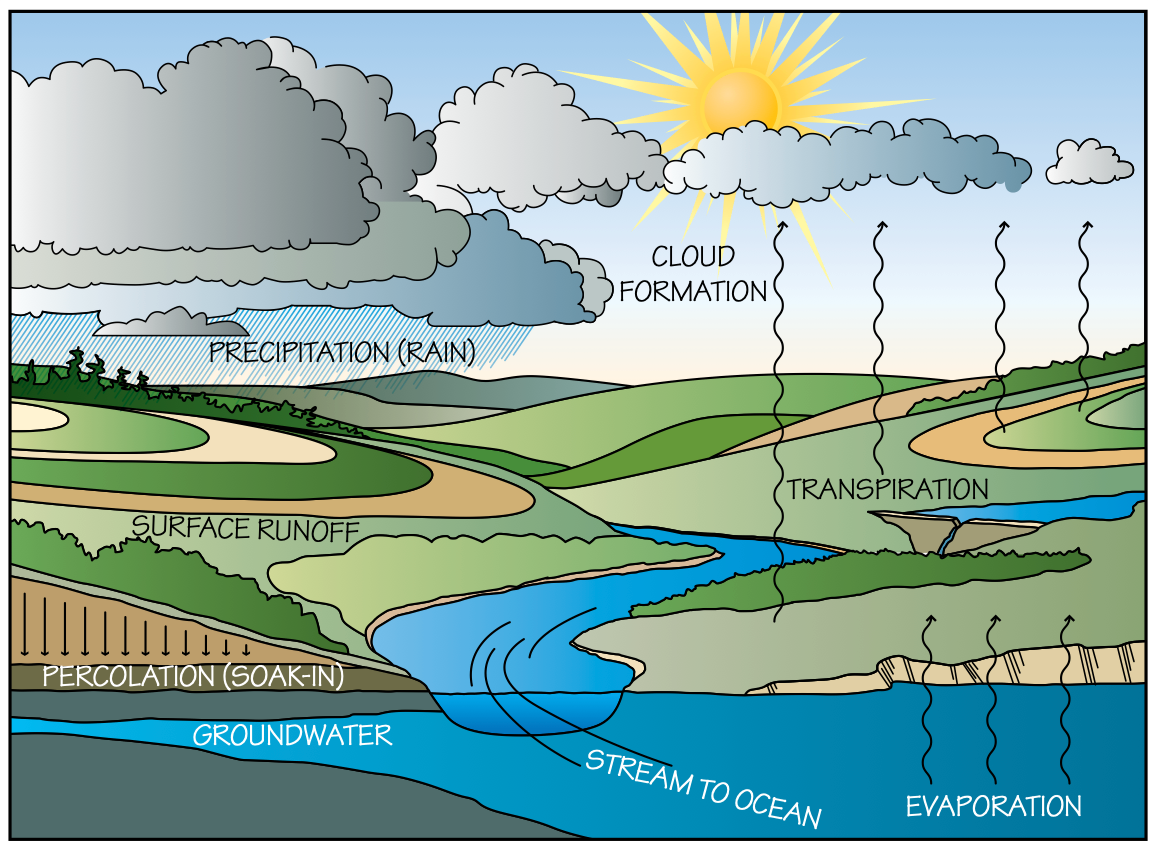
Being more interested in tying knots, canoeing, and climbing trees, I figured I’d phone this one in. Without going as far as tracing, I drew a nearly identical diagram to what was published in the Merit Badge book. Complete with squiggly evaporation lines and completely unrealistic crepuscular solar rays. When I presented my work to Dave, the Ecology Director, he wouldn’t accept it. He made me go back and draw it my own voice. With my own thought of how it worked. While technically, I had fulfilled the requirement, Dave didn’t need to explain that I had actually failed spectacularly. By choosing to not understand and just regurgitate, I wouldn’t truly understand the water cycle.
Today, 34 years later, I hear Dave’s voice in my head. Pushing me to fully understand a strategy; to use my voice in articulating it; and to be skeptical of the shortcuts a 13 year old punk kid might try to pull. I drew the water cycle. I reproduced every line with precision. I understood none of it.
And thanks to Dave, I know water is actually easy to make. I may start a new career as a food influencer with the shortest recipe on the internet: two hydrogen atoms, one oxygen atom. Everyone has those laying around the house, right?
The catch here of course is most water has cycled in and out of its phases rather than being made new. Albeit, very slowly by our clock. NASA estimates one molecule of water takes more than 3,000 years to complete a full cycle. Quick by the cosmos.
A geologist at the University of Toronto found water in a Canadian mine estimated to be 1.5 - 2.6 billion years old. Totally isolated for that entire time, not moving thru the traditional water cycle. Then, she did what most of us would do. She tasted it. She described it as "very salty and bitter, much saltier than seawater."
Do Ya Really Wanna Taste It?
I licked a rock once.
It was a river rock. Made smooth and shiny by years in the bed of a fast moving stream. How long had it been here before I arrived? Decades? Centuries? Was it waiting for me or was it indifferent to being discovered?
The inside had always been there, patient and sealed. After millennia, I just happened to be the curious one holding a hammer. There's something humbling about that. Not discovering something new. Just being the first to look at something that was always there. I thought there’d be a fossil inside, so I did the only reasonable thing given my immaturity. I split that rock open, like a kid on Christmas morning who deep down knew he was getting socks. No fossil. As my scientist friend did, I realized I was now the first human in all of time to look at the inside of this specific rock. An honor. A privilege, And a responsibility to give it a taste. Turns out old rock tastes a lot like fossil water. Salty and bitter.
Dog Days Are Over
A few summers after I earned that merit badge, I was leading a small group of Scouts on a week long hike across northeastern Ohio. We zig zagged across farm fields. Jumping old barbed wire fences. Occasionally logging a mile or two along the historic Lincoln Highway that is now Route 30. On this particular morning of the hike, we hadn’t filled our water bottles quite full enough. The group had collectively run out with about 3 hours left to until our next stop for the night. As if it were a mirage in the desert, our trail made a swift left turn and led us right thru the parking lot of the Columbiana County Dog Pound. A lone frost free spigot sitting at the edge of the property became the most spectacular thing this group of teenagers had seen in weeks. Akin to finally finding a restroom on a road trip, after convincing yourself you could hold it one more exit. Nobody has ever cared what that bathroom looked like. And we didn't care how that water tasted.
For readers who have never ventured thru Columbiana, this part of Ohio is known for three things:
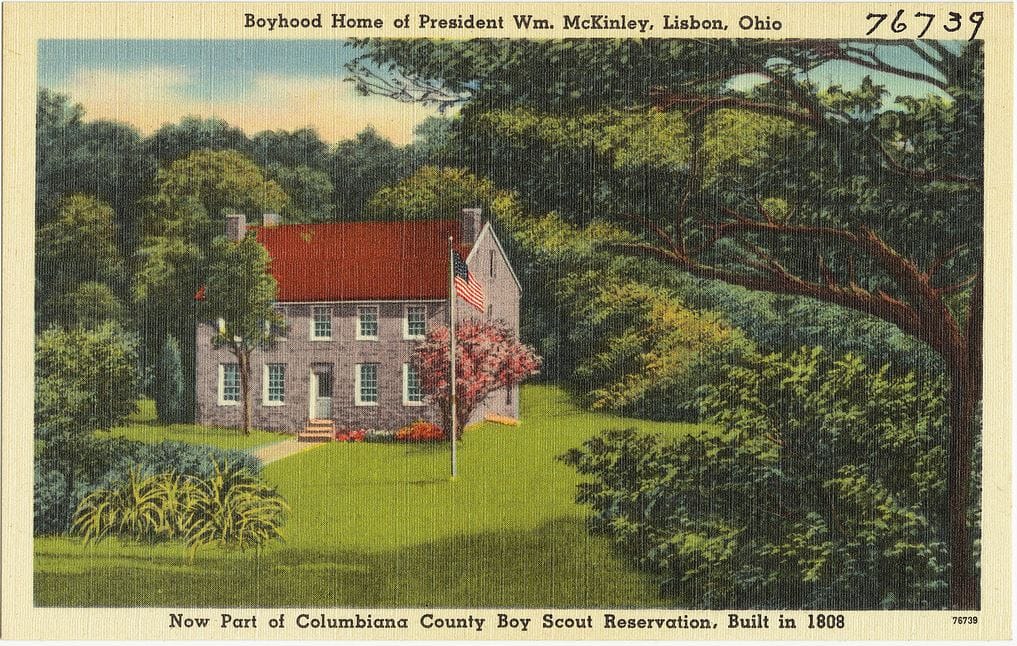
1) A stone house where President McKinley spent time with his grandparents as a child;
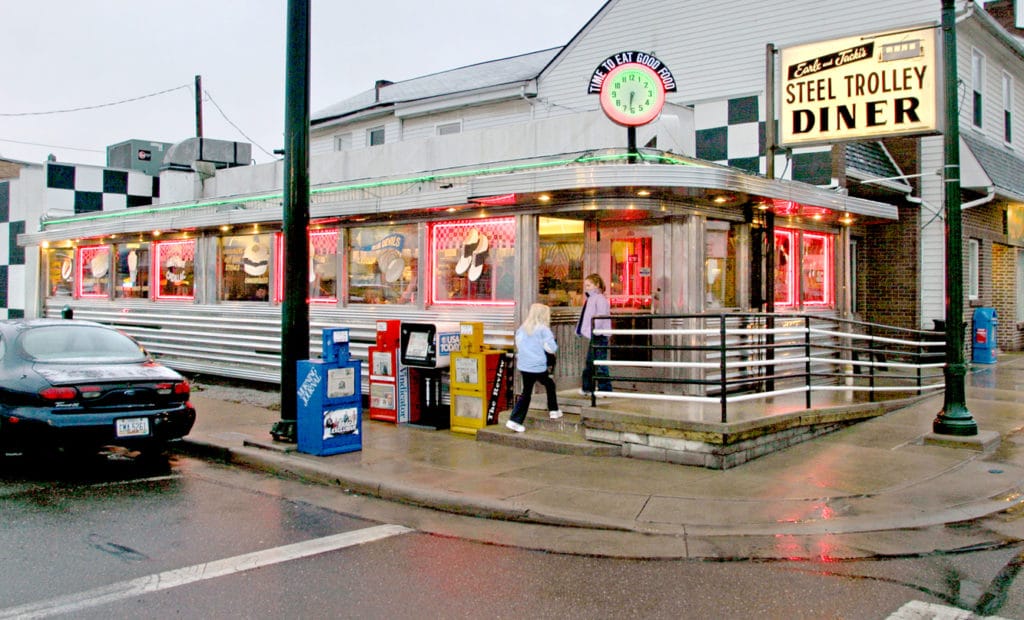
2) The now historic Steel Trolly Diner, eventually closed for 27 repeat health violations. But forever in my heart;
3) And for having distinctly bad tasting water. Described as stagnant, I now know it’s due to the high concentration of 2-methylisoborneol, an organic compound made by cyanobacteria aka blue-green algae. It’s completely harmless to humans. It has no side effects. It’s just plain gross.
Yet, on that summer day, that Columbiana County Dog Pound water was manna from heaven. It rejuvenated us enough to power thru the summer heat and get to our next stop in record time. It became legendary in our circle and a mandatory stop along the trail for years to come. That spigot had been there every time we passed. We just never needed it enough to notice.
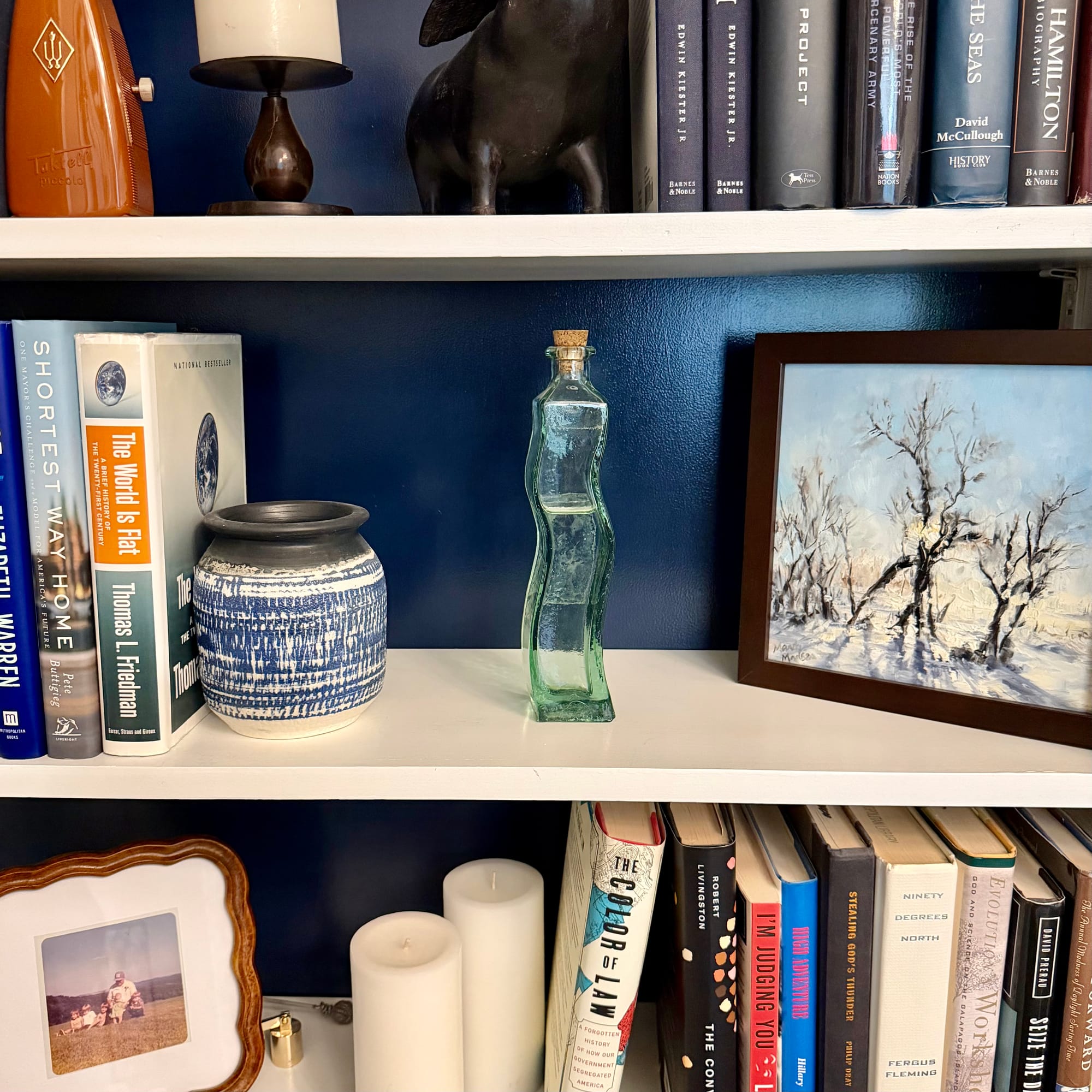
Today, a corked bottle of Columbiana's finest sits on my bookshelf as a reminder. L'eau du chien! I'm confident the water inside is at least 30 years old.
Shining Down Like Water
Now, every morning I don’t let the tap run. I don’t wait for the good water. Any water is good enough. Water that has been a cloud, a glacier, a dinosaur, a dog pound spigot, or trapped in a river rock. Water that a geologist tasted in a mine two miles underground and called salty and bitter. Water that saved a group of dehydrated Scouts on a Tuesday in Columbiana County.
It was always there. I had just stopped paying attention.