
Drill Bits, Burgers, and Why Words Matter
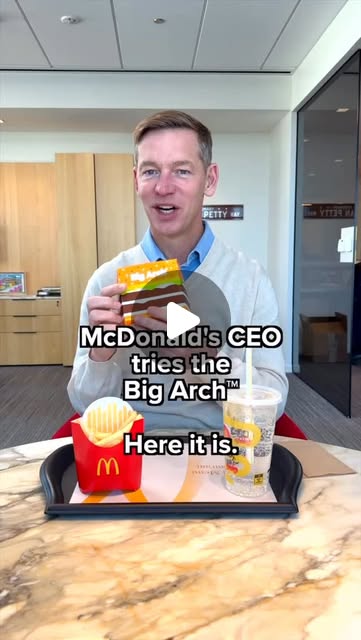
Last week, a 30-second video started the Burger Wars of 2026.
McDonald's CEO Chris Kempczinski posted a promotional clip introducing the chain's new Big Arch burger. The biggest launch for the Golden Arches since Chicken McNuggets in 1983. A moment that, by every measure, should have been triumphant.

Instead, the internet spent 72 hours making memes.
The tiny bite didn't help. Neither did the flat delivery, beige office backdrop, or stiff smile. Nope, this video was cooked from the first sentence.
"I love this product."
He said it twice! In thirty seconds.
"Product"
Not burger. Not lunch. Not “this thing I've been waiting for you to try.” Instead, he chose product.
The word used in a boardrooms reviewing quarterly margin. The word drug dealers use to sound coy. The thing mathematicians get as a result of multiplication.
That one single solitary word is where it all went wrong.
The Power of Mere Words
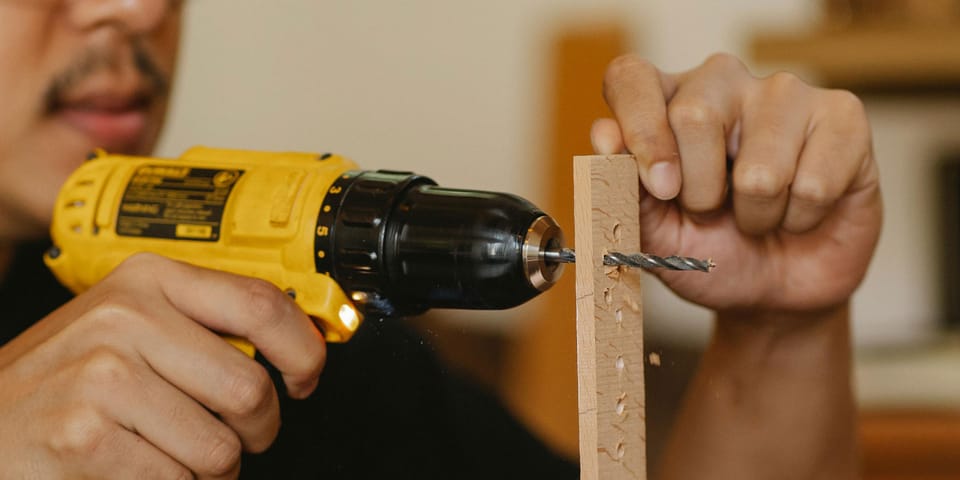
Theodore Levitt was a Harvard professor who understood something most marketers still don't. People don't buy a quarter-inch drill bit. They buy a quarter-inch hole.
What Jane Doe is really buying is the picture hung on the wall or the assembled bookshelf. The feeling of having actually finished something on a Saturday afternoon. The drill bit is the instrument. The hole is the outcome. The hanging of a photo of our beach vacation in the living room is what we want to buy. Not a “reduced-shank, high-speed, 12mm solid carbide drill bit”.
Kempczinski is selling drill bits. The layers, the bun, the beef, the specs. He recited it’s components like he’s selling horizontal glass dilatometers to an engineer with a Phd in Material Science.
He was unable to articulate the want. The end result. The solution.
“This will be your new favorite lunch.”
“This is worth pulling off the highway.”
“It's what you've been craving all week.”
Instead, he uttered the word "product" twice!
“I'm fascinated how a person's sense of consciousness can be... so transformed by nothing more magical than listening to words. Mere words.”
Re-Accommodate This
McDonald's is far from the first to let a single word unravel an entire narrative.
In 2017, a United Airlines passenger named David Dao was physically removed from an overbooked flight at O'Hare International Airport. If you've seen the video, you know what happened. He was dragged, bloodied, unconscious, down the aisle of a plane while 70 passengers watched and recorded it on their smartphones.
The next morning, CEO Oscar Munoz issued a statement. He apologized for having to "re-accommodate" the customers.
That’s right. “Re-accommodate”
Jimmy Kimmel nailed it, "That is such sanitized, say-nothing, take-no-responsibility, corporate BS speak."
Real talk? A man was dragged off a plane. Bloodied. Rendered unconscious. And the official language of the corporation was "re-accommodate." Written by a legal team when we needed to hear from humans. A word chosen deliberately to soften the severity of what happened, engineered to de-escalate. It had the opposite effect.
Within two days, United's stock had lost nearly $900 million in value. Munoz lost his opportunity to become chairman of the board. The word "re-accommodate" became permanently lodged in internet lexicon as the definitive example of corporate language insulting human intelligence.
Look, the situation was bad. But these mere words chose the company's interests over the passenger's reality. And everyone watching knew it instantly.
A $5 Million Comma
We can’t talk about the importance of words, without acknowledging how much sits upon the shoulder of grammar.
In a dispute over overtime pay, Maine's labor law exempted workers involved in "the canning, processing, preserving, freezing, drying, marketing, storing, packing for shipment or distribution" of perishable goods. See the lack of an Oxford comma after "shipment"? A federal appeals court ruled the missing comma created enough ambiguity to render the exemption unclear. The dairy drivers won. Oakhurst Dairy settled for $5 million.
"For want of a comma, we have this case," the judge wrote.
I use Oxford commas. Always have. Now you know why.
Customers Don't Speak Corporate
Here’s the part that will make my Real Estate marketing colleagues and sales friends uncomfortable.
The McDonald's CEO didn't invent the word "product." He learned it. It was trained into him through years of internal meetings, earnings calls, and strategy decks where food is referred to as product, where customers are referred to as traffic units, where experience is referred to as touchpoint. The language of large corporations is deliberately abstract. It's designed to be portable, scalable, and inoffensive in a conference room. It's great for spreadsheets, terrible for conversations.
The problem is our customers don't speak corporate.
Your customer walks into a sales office and says, “I want a home where my kids have a yard to play in, where I can finally stop moving, where Sunday morning feels the way Sunday morning is supposed to feel.”
Your CRM logs, "new prospect, single-family detached, outdoor amenity preference."
The human want and the corporate record are written in two different languages. Some of us have decoder rings. We can extrapolate, imagine, and see a story in those CRM notes. Most people, including Kempczinski, lose connection in translation.
This happens everywhere. In every industry. Internal language is quietly replacing customer language in ads and content. In homebuilding, we talk about "inventory," "product mix," "starts," and "closings." Yet our customers talk about "having a place of our own," "moving before the school year starts," and "not asking permission to paint a wall." Those are different languages. When a sales team speaks the first one in conversations that call for the second, they are the McDonald's CEO. Standing in front of the most important launch, taking a puny bite, and calling it a product.
To sell outside the pitch deck, you must be human. Listen to the words your customer use before you use the words your company trained you to use.
Very few people wake up wanting a drill bit. They wake up wanting the hole it makes, and the art they're finally able to hang on the wall.
Talk like my mom
There is a test I've started applying to any language that will be customer-facing. Read it back and ask: would a person say this?
Not a marketing person. A person. A real regular person.
Would my mom, talking to a friend over the fence about her home, use the words your sales team has been trained to say? Or would she say something simpler, plainer, and truer?
Start there. With the simpler and truer version. Build everything around that. Find the words your customers use before they walk in the door. And make sure those are the words they hear when they do.
Because a single word, said the wrong way, on camera, in front of millions of people, on the day of your biggest launch in forty years, will become the only thing anyone remembers.
He called it a product.
You can do better.